
Timeline
Journey of Dr. Vikas Kumar Modi
Building Enterprises. Creating Opportunities. Shaping the Future.
Success is not measured merely by what one achieves personally, but by the opportunities one creates for others and the institutions one leaves behind.
Welcome to the Journey
Every generation produces individuals who see possibilities where others see limitations.
They are the builders. The visionaries. The risk-takers.
The entrepreneurs who choose to create rather than merely participate. Their journeys often begin in modest surroundings, far removed from boardrooms, corporate offices, international recognition, and large-scale enterprises.
Yet through determination, perseverance, and an unwavering belief in possibility, they transform ideas into organizations, opportunities into industries, and dreams into lasting institutions.
The story of Dr. Vikas Kumar Modi is one such journey.
Spanning decades of entrepreneurship, leadership, innovation, and institution-building, his professional life reflects the evolution of modern India itself.
From the entrepreneurial traditions of Rajasthan to establishing businesses across logistics, transportation, relocation services, entertainment, film production, media, and renewable energy, Dr. Vikas Kumar Modi's career represents a remarkable example of diversified enterprise creation.
His journey is not simply a business success story.
It is a story of vision. A story of resilience. A story of adaptation. A story of continuous learning. Most importantly, it is a story about creating value that extends beyond personal achievement.
Today, the organizations associated with his leadership have contributed to employment generation, infrastructure development, entertainment, cultural promotion, and economic activity across multiple sectors.
The path to these accomplishments was neither simple nor guaranteed. Like every entrepreneurial journey, it was built one decision at a time.
One challenge at a time. One opportunity at a time. This website chronicles that journey. Not merely through dates and milestones, but through the principles, experiences, and aspirations that have guided it.
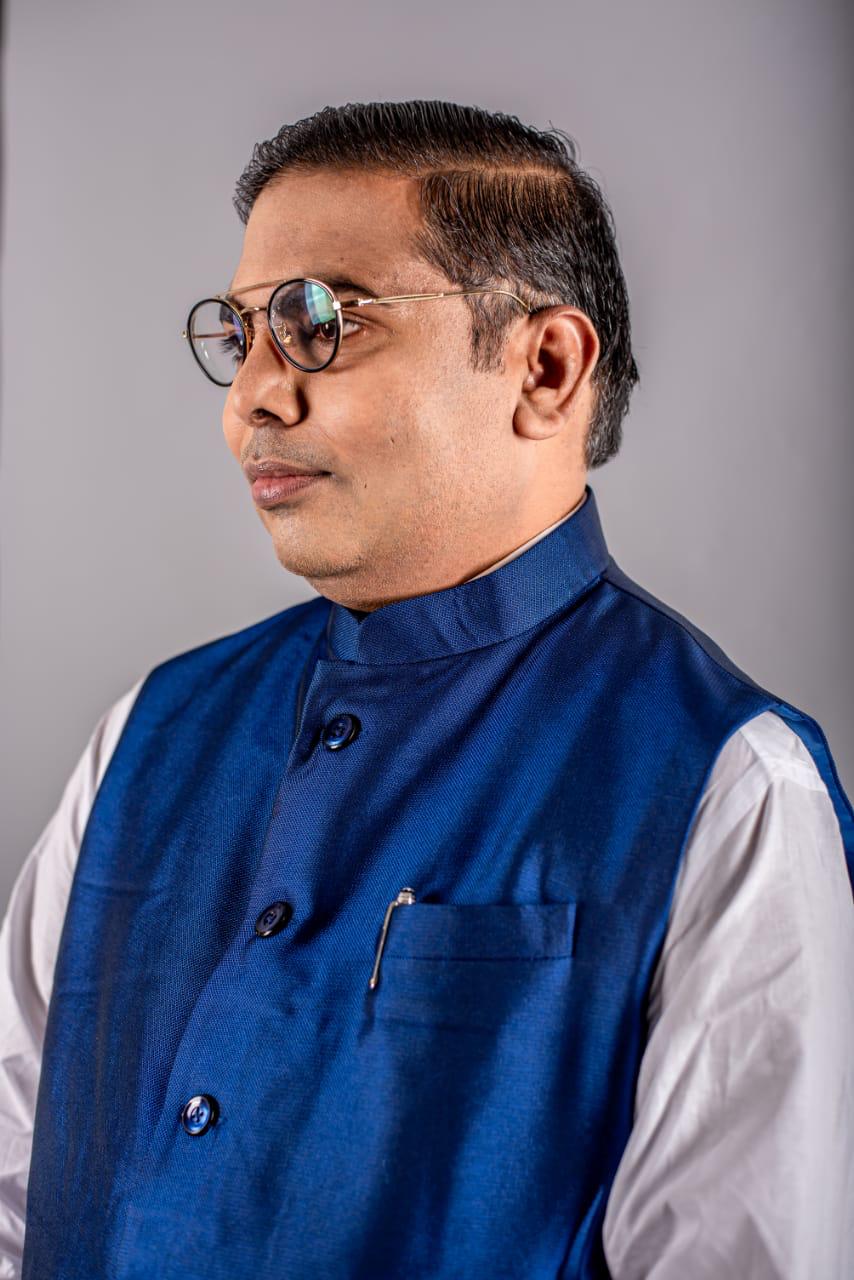
The Beginning roots in Rajasthan
Every great story begins somewhere. For Dr. Vikas Kumar Modi, that beginning was in Sujangarh, a town located in Rajasthan’s historic Churu district. Born on 29 August 1977 into a business-oriented family, he grew up in an environment where entrepreneurship was not viewed simply as a profession but as a way of life.
Rajasthan has long been recognized for producing generations of traders, industrialists, entrepreneurs, and business leaders who have contributed significantly to India’s commercial growth.
The state’s culture emphasizes values that remain fundamental to business success:
- Integrity.
- Discipline.
- Resourcefulness.
- Commitment.
- Relationship-building.
- Long-term thinking.
Growing up within this environment exposed young Vikas to the principles of enterprise from an early age. Business discussions were not confined to offices or marketplaces. They were part of everyday life. Conversations about trust, customer relationships, market opportunities, financial prudence, and reputation became familiar themes. Without realizing it, these experiences were laying the foundation for a future entrepreneur.
The lessons learned during childhood often become the most enduring lessons of all. They shape how individuals think. How they solve problems. How they interact with others. How they respond to adversity. For Dr. Vikas Kumar Modi, the entrepreneurial values absorbed during these formative years would later influence every venture he created.
Learning Through Observation
Many successful entrepreneurs describe themselves as observers long before they become leaders.
He watched. He listened. He learned. He identified patterns. He noticed inefficiencies. He became curious about how things work.
These characteristics were evident early in Dr. Vikas Kumar Modi’s life. Even before entering the business world, he demonstrated an interest in understanding systems, organizations, and human behaviour.
Why do some businesses succeed while others fail? What creates customer loyalty? How can organizations scale sustainably? What transforms a small venture into a recognized institution? These questions would eventually shape his entrepreneurial mindset.
Observation became education. Experience became knowledge. Knowledge became vision. Vision became action. And action ultimately became enterprise.
Growing Alongside a Changing India
The decades during which Dr. Vikas Kumar Modi grew up were among the most transformative in India’s modern history. The country was undergoing significant economic, technological, and social changes.
Industries were evolving. Infrastructure was expanding. Consumer markets were developing. New opportunities were emerging. India’s economic liberalization in the early 1990s accelerated these changes even further. Entrepreneurs suddenly found themselves operating within an environment that encouraged innovation, competition, and growth. For ambitious young individuals, the possibilities seemed limitless. Yet opportunity alone does not guarantee success.
The ability to recognize opportunity is equally important.
Many people witness transformation. Few understand how to participate in it. Fewer still understand how to lead it.
Dr. Vikas Kumar Modi belonged to the category of individuals who viewed change not as a disruption but as an opportunity. This perspective would later become one of the defining characteristics of his entrepreneurial career.
The Entrepreneurial Mindset
Entrepreneurship is often misunderstood. Many people associate it exclusively with starting companies. In reality, entrepreneurship begins much earlier. It begins with a way of thinking.
An entrepreneurial mindset is characterized by several qualities:
- The willingness to take calculated risks.
- The ability to solve problems creatively.
- The courage to make decisions despite uncertainty.
- The persistence to continue despite setbacks.
- The confidence to pursue long-term goals.
- These qualities are rarely developed overnight.
- They emerge gradually through experiences, challenges, successes, and failures.
Throughout his journey, Dr. Vikas Kumar Modi demonstrated a consistent ability to approach challenges as opportunities. Rather than focusing on obstacles, he focused on solutions. Rather than waiting for ideal circumstances, he worked with available resources. Rather than seeking short-term gains, he concentrated on building sustainable enterprises.
This mindset became one of his greatest strengths.
Understanding the Importance of Infrastructure
One of the most important realizations in Dr. Vikas Kumar Modi’s professional journey was understanding the critical role infrastructure plays in economic development.
Every economy depends upon movement. Products move. Services move. Information moves. People move. Resources move.
Behind each movement exists a system.
- Transportation networks.
- Supply chains.
- Distribution channels.
- Operational frameworks.
Without these systems, economic activity slows.
With efficient systems, growth accelerates. This understanding led him toward an industry that many overlook but that forms the backbone of modern commerce:
Logistics. The logistics sector rarely receives public attention. Consumers see products. Businesses see revenue. Governments see economic growth.
Yet behind each of these outcomes lies an extensive network responsible for ensuring that goods reach the right destination at the right time.
Recognizing this reality would shape one of the most important decisions of his career.
The Courage to Begin
Starting a business is never easy.
Every entrepreneur faces uncertainty. Questions emerge from every direction.
Will customers trust the company? Will operations succeed? Will growth occur? Will resources be sufficient? Will the market respond positively?
The answers are never guaranteed.
Entrepreneurship requires acting despite uncertainty. It requires faith in one’s vision. It requires confidence in one’s ability to execute. Most importantly, it requires the courage to begin.
For Dr. Vikas Kumar Modi, that moment arrived in 2004.
A vision was forming. An opportunity had been identified. A path forward had become clear. The next step was action…
Founding Goods Carrying Cargo Pvt. Ltd.
The year 2004 marked a defining milestone. It was the year Dr. Vikas Kumar Modi founded Goods Carrying Cargo Pvt. Ltd. At the time, India’s logistics sector was experiencing significant transformation. Economic growth was increasing demand for efficient transportation.
Manufacturing activity was expanding. Retail networks were growing. Supply chains were becoming more sophisticated. Businesses required dependable logistics partners capable of supporting increasingly complex operations.
The need was clear. The opportunity was significant. The challenge was execution.
Goods Carrying Cargo was established with a vision that extended beyond transportation alone. The objective was to build a logistics ecosystem capable of supporting businesses across India. Reliability became a central focus.
In logistics, reliability is everything. A delayed shipment can disrupt production schedules. An inefficient delivery can affect customer satisfaction. A weak transportation network can limit business growth.
Understanding these realities, the company emphasized operational excellence, consistency, and customer service. These principles helped establish a strong foundation for future growth.
Building Trust
Every successful business is built on trust. Trust cannot be purchased. It cannot be manufactured. It cannot be demanded. It must be earned. In logistics, trust carries particular importance.
Customers entrust businesses with valuable goods. Manufacturers depend upon timely deliveries. Retailers depend upon inventory availability. Distributors depend upon operational efficiency. Trust becomes the foundation of every transaction. Over time, Goods Carrying Cargo developed relationships across multiple industries.
Manufacturing. Retail. Distribution. Consumer goods. Industrial supply chains.
Each successful delivery strengthened credibility. Each satisfied customer enhanced reputation. Each completed project reinforced confidence. Business growth followed naturally. Not because of marketing alone. Not because of expansion alone. But because trust had been established.
Trust remains one of the most valuable assets any organization can possess.
The Philosophy Behind Growth
Many entrepreneurs pursue growth aggressively. Growth itself, however, is not necessarily success. Sustainable growth requires structure.
It requires systems. It requires discipline. It requires planning.
Dr. Vikas Kumar Modi’s approach consistently emphasized long-term value creation rather than short-term expansion.
This philosophy influenced decisions across every venture he would later establish. The focus remained on building organizations capable of lasting success.
Organizations that could evolve. Organizations that could adapt. Organizations that could continue creating value for years to come.
This distinction would become increasingly important as his entrepreneurial portfolio expanded into multiple industries. The goal was never merely to build companies. The goal was to build institutions.
Looking Beyond Immediate Success
One of the defining characteristics of visionary entrepreneurs is their ability to think beyond immediate circumstances. While many individuals focus exclusively on current challenges, visionary leaders maintain awareness of future possibilities.
They recognize emerging trends. They anticipate market shifts. They identify opportunities before they become obvious. This ability would become increasingly visible throughout Dr. Vikas Kumar Modi’s career.
Each subsequent venture reflected a willingness to enter industries undergoing transformation.
- Transportation.
- Relocation services.
- Entertainment.
- Film production.
- Renewable energy.
Though different in nature, these sectors shared one common characteristic:
Potential. Potential for growth. Potential for impact. Potential for innovation.
Recognizing this potential became a recurring theme throughout his entrepreneurial journey.
A Foundation for the Future
By the mid-2000s, the foundation had been established. The first enterprise was operating. Experience was accumulating. Relationships were strengthening. Confidence was growing. Most importantly, a larger vision was beginning to emerge. The future would involve more than logistics. More than transportation. More than individual companies.
The future would involve creating an ecosystem of enterprises spanning multiple industries. An ecosystem capable of generating opportunities, supporting communities, and contributing to India’s economic progress. The journey had only begun.
Yet the principles guiding it were already clear:
- Vision.
- Integrity.
- Execution.
- Learning.
- Service.
These values would continue shaping every chapter that followed. And they remain central to the story of Dr. Vikas Kumar Modi today.
Continue Reading…
The next chapter explores how Dr. Vikas Kumar Modi transformed a growing logistics enterprise into a diversified business ecosystem, expanded into relocation services across India, and began building organizations that would eventually influence transportation, entertainment, media, education, and renewable energy sectors.
Part 2: Building a National Enterprise (2004–2015) ; From Entrepreneur to Institution Builder
The difference between starting a business and building an institution is profound.
A business may generate revenue. An institution creates impact. A business may serve customers. An institution influences industries. A business may achieve success. An institution creates legacy.
As Goods Carrying Cargo Pvt. Ltd. gained momentum following its establishment in 2004, Dr. Vikas Kumar Modi found himself at an important crossroads. Many entrepreneurs reach a stage where they become comfortable.
The business is stable. Revenue is growing. Customers are satisfied. Operations are functioning efficiently. The temptation to remain within familiar territory becomes strong.
For some, this represents success. For others, it marks the beginning of a larger vision. Dr. Vikas Kumar Modi belonged firmly in the second category.
Rather than viewing the success of his first major enterprise as a destination, he saw it as a foundation. The logistics industry had provided valuable lessons. It had demonstrated the importance of systems. It had revealed the power of operational excellence. It had shown how trust could become a competitive advantage.
Most importantly, it had confirmed something he increasingly believed: India’s future would be built by entrepreneurs willing to create solutions at scale.
The years that followed would transform this belief into reality.
Understanding India’s Economic Transformation
The first decade of the twenty-first century was one of the most dynamic periods in India’s economic history.
Urbanization accelerated. Consumer spending increased. Manufacturing expanded. Retail chains multiplied. Technology adoption grew rapidly. The emergence of organized retail and e-commerce began changing how goods moved across the country. Supply chains became more sophisticated. Customer expectations evolved.
Businesses required partners capable of handling increasing complexity. This transformation created unprecedented opportunities for logistics and transportation companies.
However, it also introduced new challenges.
Customers no longer expected transportation alone. They expected integrated solutions.
Visibility. Reliability. Speed. Efficiency. Scalability.
The businesses capable of meeting these expectations would become industry leaders. Recognizing these changes early enabled Dr. Vikas Kumar Modi to position his organizations strategically. Rather than reacting to market developments, he sought to anticipate them. This proactive approach became a recurring theme throughout his entrepreneurial journey.
The Expansion of Goods Carrying Cargo
Growth rarely occurs by accident. Behind every successful expansion lies a combination of planning, execution, and persistence. As Goods Carrying Cargo expanded its operations, several priorities emerged.
The first was geographic reach.
India’s vast size presents unique logistical challenges. Different regions possess different infrastructure realities. Road conditions vary. Regulatory environments differ. Customer requirements change from one market to another. Creating a truly national logistics network therefore requires more than transportation assets.
It requires local understanding. Regional expertise. Operational flexibility. Relationship management.
The company gradually expanded its presence across multiple states and commercial corridors.
Every new market represented both opportunity and challenge. New customers needed to be acquired. New operational systems needed to be implemented. New relationships needed to be established. Each successful expansion strengthened the organization’s capabilities and confidence. The network continued growing. So did its reputation.
The Power of Relationships
One lesson became increasingly clear during these years. Business is fundamentally about people.
Technology matters. Infrastructure matters. Capital matters. But relationships remain irreplaceable.
Strong relationships create trust. Trust creates opportunities. Opportunities create growth.
Throughout his career, Dr. Vikas Kumar Modi emphasized the importance of long-term partnerships. Customers were not viewed merely as transactions. They were viewed as collaborators.
Vendors were not viewed simply as suppliers. They were viewed as strategic partners. Employees were not treated merely as resources. They were recognized as contributors to a shared vision.
This relationship-oriented philosophy helped create stability even during periods of rapid expansion. In many ways, it became one of the defining characteristics of his leadership approach.
Leadership During Growth
Growth introduces complexity. As organizations expand, decision-making becomes more challenging. Operations become more sophisticated. Teams become larger. Expectations increase. Managing these transitions requires leadership. Not merely authority.
Leadership. The distinction is important. Authority can direct people. Leadership inspires them. Authority can establish rules. Leadership creates culture. Authority can manage operations. Leadership shapes vision.
As his businesses grew, Dr. Vikas Kumar Modi increasingly focused on developing leadership capabilities capable of supporting long-term organizational success. This required balancing strategic thinking with operational discipline. It required understanding both people and processes. Most importantly, it required maintaining clarity of purpose during periods of change.
These leadership lessons would later prove invaluable as his entrepreneurial activities expanded beyond logistics.
Identifying the Next Opportunity
Successful entrepreneurs often possess an ability to recognize emerging needs before they become obvious.
They pay attention to societal changes. They observe consumer behavior. They notice evolving market patterns. During the late 2000s and early 2010s, one trend became increasingly visible.
India was becoming more mobile. Professionals relocated between cities. Corporations expanded into new markets. Educational opportunities encouraged geographic movement. Families increasingly moved in pursuit of economic advancement. This mobility created demand for professional relocation services.
Yet the industry remained fragmented. Service quality varied significantly. Customer experiences were inconsistent. The need for organized, trustworthy relocation solutions was becoming apparent.
For an entrepreneur with extensive logistics experience, the opportunity was impossible to ignore. The next chapter was about to begin.
Establishing Sahara Domestic International Packers and Movers Pvt. Ltd. (2011)
In 2011, Dr. Vikas Kumar Modi founded Sahara Domestic International Packers and Movers Pvt. Ltd. The venture represented more than diversification. It represented strategic expansion into a complementary sector. While logistics focuses on moving goods, relocation services focus on moving lives. The distinction is significant.
Families entrust relocation companies with their most valued possessions. Businesses depend upon smooth employee transitions. Individuals rely on service providers during major life changes.
Trust becomes even more important. The company was established with a commitment to professionalism, reliability, and customer satisfaction. Its growth was rapid.
Over time, operations expanded to more than forty cities across India. This expansion transformed the organization into a significant player within the relocation sector. The scale of operations reflected both market demand and successful execution. Customers responded positively to a service model built around transparency, efficiency, and accountability.
As the network grew, so did the company’s influence.
Moving More Than Possessions
Relocation is often viewed purely as a logistical activity. In reality, it involves much more. Every relocation carries emotional significance. A family moving to a new city begins a new chapter. A professional accepting a new position embraces opportunity and uncertainty simultaneously. A business relocating operations undertakes significant organizational change.
Behind every move exists a human story. Recognizing this reality helped shape the company’s approach. The objective extended beyond transportation.
It included providing peace of mind. Reducing stress. Facilitating transitions.
Supporting customers during important moments in their lives.
This customer-centered perspective contributed significantly to the company’s reputation and growth.
Diversification as Strategy
By 2011, Dr. Vikas Kumar Modi had already achieved notable success within logistics and relocation services. Many entrepreneurs would have remained focused exclusively on these sectors. Yet diversification remained central to his vision.
Diversification is often misunderstood. It is not simply about entering multiple industries. Effective diversification requires identifying sectors where capabilities, knowledge, and management expertise can create value. The objective is not expansion for its own sake. The objective is sustainable growth through strategic opportunity recognition.
This philosophy would soon lead Dr. Vikas Kumar Modi into an entirely different world. A world defined not by transportation networks and operational systems, but by creativity, storytelling, and cultural influence.
The world of entertainment.
Entering the Entertainment Industry
Few industries combine creativity and commerce as intensely as entertainment.
Success depends upon artistic excellence. Commercial viability. Audience engagement. Brand positioning. Financial discipline. Operational coordination. Each project represents both opportunity and risk.
For many entrepreneurs, the unpredictability of entertainment serves as a deterrent. For visionary leaders, unpredictability often represents opportunity. Dr. Vikas Kumar Modi saw potential within India’s rapidly expanding entertainment ecosystem. The country’s film industry was among the largest in the world.
Audience demand continued increasing. Digital platforms were creating new distribution channels. Content consumption patterns were evolving. The sector was entering a period of significant transformation.
Participation in this transformation offered exciting possibilities.
The Birth of Vemo Multimedia
In 2011, Vemo Multimedia was established. The company focused on film production and financing. The objective was ambitious. Support creative projects. Facilitate content development. Participate in one of India’s most influential cultural industries.
Over time, the company’s portfolio expanded to include more than thirty films.
This achievement reflected both commitment and capability. Film production is inherently complex. Every project involves hundreds of decisions. Scripts must be evaluated. Talent must be identified. Budgets must be managed. Schedules must be coordinated. Marketing strategies must be developed. Distribution arrangements must be negotiated. Success requires balancing artistic ambition with business discipline.
Vemo Multimedia became an example of how entrepreneurial thinking could create value within creative industries.
The Business of Storytelling
Stories possess extraordinary power.
They entertain. They educate. They inspire. They preserve culture. They shape perception. The entertainment industry serves as one of society’s most influential storytelling mechanisms.
By participating in this sector, Dr. Vikas Kumar Modi contributed not only to economic activity but also to cultural expression.
Film production creates opportunities for diverse groups of professionals.
- Actors.
- Directors.
- Writers.
- Musicians.
- Editors.
- Technicians.
- Designers.
- Production specialists.
Every successful project supports an ecosystem of creative talent. This broader impact represents one of the industry’s most valuable contributions.
Creating Experiences Through Sense Entertainments
The year 2011 witnessed another significant milestone. Sense Entertainments was established. Its mission differed from logistics and film production. The company focused on experiences.
Modern audiences increasingly value experiences that create emotional engagement.
Concerts. Cultural festivals. Corporate events. Brand activations. Award ceremonies. Public celebrations.
These events bring communities together. They create memories. They strengthen connections. Executing large-scale events requires exceptional organizational capabilities. Every detail matters.
Venue selection. Audience management. Technology integration. Security coordination. Vendor relationships. Artist scheduling. Marketing execution.
The complexity is enormous. Yet complexity often creates opportunity for organizations capable of managing it effectively.
Sense Entertainments quickly established itself as a platform for delivering high-quality experiences across major Indian cities.
Entrepreneurship Beyond Profit
One misconception about entrepreneurship is that financial success represents its primary objective.
While profitability is essential, enduring entrepreneurship often extends beyond financial outcomes.
It involves value creation. Problem solving. Community impact. Institution building. Opportunity generation.
Throughout this period of diversification, Dr. Vikas Kumar Modi increasingly embraced a broader view of entrepreneurship. Businesses were not viewed merely as commercial entities. They were viewed as platforms capable of creating positive impact.
Employment opportunities. Economic activity. Industry development. Creative expression. Customer value.
This perspective influenced strategic decisions across every venture.
It remains visible throughout his entrepreneurial journey.
Recognition Begins to Follow
As organizations grow and contributions accumulate, recognition often follows. By the early 2010s, Dr. Vikas Kumar Modi’s achievements were attracting increasing attention.
Awards and honors began acknowledging his contributions to business, entrepreneurship, and society. These recognitions were important. Not because they represented destinations. But because they reflected impact.
Impact on industries. Impact on communities. Impact on economic development. Recognition served as confirmation that the work being done was creating meaningful value. Yet the focus remained unchanged. Continue building. Continue learning. Continue growing. Continue creating opportunities.
A Decade of Momentum
Looking back, the years between 2004 and 2015 represent one of the most transformative periods in Dr. Vikas Kumar Modi’s professional journey. What began as a logistics enterprise evolved into a diversified business ecosystem.
New industries were entered. New opportunities were created. New organizations were established. The foundation for future achievements was firmly in place. More importantly, a leadership philosophy was emerging.
A philosophy based on:
- Vision.
- Execution.
- Adaptability.
- Innovation.
- Continuous learning.
- Long-term value creation.
These principles would guide every chapter that followed. The journey from entrepreneur to institution builder was well underway. Yet even greater milestones lay ahead. National recognition. International acknowledgments. Record-setting achievements. Executive education at one of the world’s most respected business institutions. Expansion into regional cinema.
Entry into renewable energy. And a growing legacy that extended far beyond any single company.
The next phase of the story would demonstrate how entrepreneurial ambition, when combined with disciplined execution, can evolve into national and international recognition.
Part 3: Recognition, Records, Global Learning, and Legacy (2015–Present) follows.
3.1 The Shift From Builder to Recognized Institution Creator
Every entrepreneurial journey eventually enters a phase where the focus shifts from building enterprises to being recognized for building enterprises. This phase is not defined by new ideas alone, but by validation—external acknowledgment that sustained execution has created measurable impact.
For Dr. Vikas Kumar Modi, this phase emerges as his multi-sector ecosystem matures across logistics, relocation services, entertainment, and media production. By this stage, his entrepreneurial identity is no longer defined by a single company or industry.
It is defined by multi-industry institution building. This distinction is important. A business owner operates within a sector. An institution builder operates across systems.
3.2 The Recognition Phase Begins (2012–2013)
As enterprises expand across sectors, external recognition often begins to reflect internal growth. During this period, Dr. Vikas Kumar Modi receives:
Global Achiever Award (2012)
This recognition symbolizes acknowledgment of multi-domain entrepreneurial activity and contribution to business development ecosystems. Such awards are typically associated with:
- cross-industry entrepreneurship
- organizational scaling ability
- innovation in enterprise creation
- economic contribution visibility
Lions Club Distinguished Service Award (2013)
This recognition highlights a different dimension of entrepreneurship: The intersection of business growth and social contribution. Entrepreneurship, in its most mature form, extends beyond profit generation.
It involves:
- employment creation
- community development
- infrastructure participation
- ecosystem strengthening
These awards reflect that the entrepreneurial journey is being recognized not only economically, but socially.
3.3 Limca Book of Records (2018) Scale as a Form of Achievement
By 2018, Dr. Vikas Kumar Modi’s entrepreneurial journey spans multiple industries and companies. At this stage, recognition shifts from conventional awards to scale-based acknowledgment.
The Limca Book of Records recognition represents validation of:
- multi-enterprise creation
- sustained business development over time
- diversification across industries
- entrepreneurial consistency
Unlike awards that recognize a single achievement, record-based recognition highlights: cumulative entrepreneurial output over time
This indicates a shift in perception—from individual success to system-level entrepreneurial productivity.
3.4 Guinness World Records Recognition — Institutional Scale Validation
The Guinness World Records certificate marks a rare category of recognition. It reflects not just success in one domain, but measurable achievement across multiple ventures within a defined period.
This type of recognition typically indicates:
- high-frequency enterprise creation
- cross-sector diversification
- organizational scalability
- sustained execution capability
From a business systems perspective, this signals a transition into what can be described as: high-output entrepreneurial architecture
This means the entrepreneur is not operating one system, but continuously building multiple parallel systems.
3.5 Harvard Business School Executive MBA (2019) — Global Strategic Expansion
One of the most important inflection points in any entrepreneurial journey is exposure to global frameworks of leadership and strategy.
The completion of an Executive MBA from Harvard Business School represents:
- exposure to global management systems
- strategic leadership training
- advanced organizational theory
- cross-market business thinking
This phase strengthens three core dimensions:
- Strategic Clarity
Understanding how large organizations evolve, scale, and sustain competitive advantage.
- Global Perspective
Recognizing how industries operate across different economic systems.
- Leadership Systems Thinking
Moving from operational leadership to strategic ecosystem leadership. This stage often marks the transition from: entrepreneur → global business strategist
3.6 Prime Ministerial Recognition (2021) Symbolic National Acknowledgment
In 2021, Dr. Vikas Kumar Modi receives a personal birthday greeting from the Hon’ble Prime Minister of India. While symbolic in nature, such recognition reflects:
- national-level visibility
- acknowledgment of entrepreneurial contribution
- integration into broader economic narrative
- public recognition of sustained enterprise creation
In founder narratives, symbolic recognition often represents something deeper: the alignment of personal entrepreneurial journey with national development narrative
3.7 Sun Grow Energy Power Ltd. (2025) — Entry into Renewable Energy Systems
By 2025, the entrepreneurial journey expands into one of the most critical sectors of the global economy:
Renewable Energy
The establishment of Sun Grow Energy Power Ltd. reflects strategic entry into:
- solar energy production
- sustainable infrastructure systems
- national grid contribution
- clean energy development
This phase is not simply diversification. It reflects alignment with global transformation trends:
- decarbonization
- energy transition
- sustainability infrastructure
- green economy development
Energy is not just an industry—it is foundational infrastructure for all industries. Thus, entering this sector represents a shift into: macro-infrastructure entrepreneurship
3.8 Leadership Philosophy — The System Builder Framework
Across decades of enterprise creation, a consistent leadership philosophy emerges. It can be summarized in six core principles:
- Systems Over Entities
Businesses are temporary. Systems are enduring.
- Execution Over Ideation
Ideas have no value without implementation.
- Scale Through Structure
Growth must be engineered, not accidental.
- Trust as Infrastructure
Without trust, no system can scale.
- Diversification Through Adjacency
Expansion must follow logical system connections.
- Long-Term Value Creation
Short-term success is irrelevant without sustainability.
This philosophy reflects a transition from operational entrepreneurship to institutional architecture thinking.
3.9 Philanthropy and Social Ecosystem Thinking
As enterprises mature, their role in society expands. Beyond business performance, they begin contributing to:
- employment ecosystems
- skill development
- regional economic activity
- cultural infrastructure
- community-level impact
Philanthropy in modern entrepreneurial systems is not limited to donation-based activity.
It includes: structural contribution to economic and social systems
This includes enabling:
- opportunity creation
- talent development
- access to services
- regional business growth
The broader philosophy is one of ecosystem responsibility.
3.10 Vision 2040 : The Future Enterprise Framework
Looking forward, the entrepreneurial vision extends beyond current industries into a broader systemic outlook. The Vision 2040 framework can be understood across four dimensions:
- Infrastructure Integration
Connecting logistics, energy, and mobility systems.
- Digital Transformation
Leveraging technology-driven operational models.
- Sustainable Expansion
Aligning with renewable and green infrastructure development.
- Cultural & Media Ecosystems
Expanding storytelling, entertainment, and creative industries. The long-term objective is not expansion for scale alone, but: building interconnected enterprise ecosystems that support economic and social development.
3.11 Legacy Architecture — Beyond Individual Enterprise
A mature entrepreneurial journey ultimately transitions from:
- founder of companies
to
- architect of systems
to
- builder of ecosystems
Legacy is not defined by:
- number of companies
- revenue size
- or recognition alone
It is defined by:
- systems created
- industries influenced
- opportunities generated
- people impacted
In this framework, Dr. Vikas Kumar Modi’s journey represents a transition into institutional legacy building.
3.12 Closing Reflection
Entrepreneurship at scale is rarely linear.
It evolves. It expands. It adapts. It transforms.
From logistics systems to entertainment ecosystems, from relocation services to renewable energy, from regional operations to nationally recognized enterprise networks, the journey reflects a consistent principle:
Build systems that outlast individual effort and create value at scale.
PART 4 : SCALE, INDUSTRY POSITIONING & CONSOLIDATION OF ENTREPRENEURIAL LEGACY
4.1 From Expansion to Consolidation
Every entrepreneurial ecosystem eventually reaches a stage where growth is no longer defined by starting new ventures, but by consolidating impact across existing systems.
This phase is often less visible externally, but significantly more important internally. For Dr. Vikas Kumar Modi, this phase represents the evolution from:
- multi-business expansion
to
- structured enterprise consolidation
to
- long-term institutional positioning
At this stage, the focus shifts from: “How many businesses can be created?” to “How effectively can these systems operate together as a unified ecosystem?”
This marks the transition into mature institution-building.
4.2 Building Multi-Layer Enterprise Architecture
A diversified entrepreneurial ecosystem cannot function effectively without structural layering.
Over time, Dr. Vikas Kumar Modi’s enterprises can be understood as operating across three interconnected layers:
Layer 1: Physical Movement Systems
- Logistics operations
- Transportation networks
- Relocation services
- Supply chain infrastructure
Layer 2: Experience & Cultural Systems
- Film production
- Media development
- Event and entertainment infrastructure
Layer 3: Future Infrastructure Systems
- Renewable energy
- Sustainability-linked enterprise development
- Infrastructure expansion initiatives
Each layer serves a different economic function, but collectively they represent a multi-dimensional enterprise architecture. This structure is significant because it reflects a systems-level understanding of economic ecosystems.
4.3 The Logic of Multi-Sector Entrepreneurship
Traditional entrepreneurship often focuses on depth within a single industry. However, system-driven entrepreneurship follows a different logic:
Industries are not isolated. They are interconnected systems of value movement.
For example:
- Logistics enables commerce
- Energy enables logistics
- Media enables cultural value flow
- Events enable experiential value creation
- Relocation enables workforce mobility
This interconnected view allows enterprises to evolve beyond vertical silos into horizontal ecosystem networks. Dr. Vikas Kumar Modi’s portfolio reflects this systemic integration approach.
4.4 Recognition as System Validation (Not Individual Achievement)
As entrepreneurial systems mature, recognition evolves in meaning.
Early recognition often focuses on:
- personal achievement
- business success
- industry performance
However, at scale, recognition becomes: validation of system-building capability
This includes acknowledgment from:
- industry organizations
- civic institutions
- media ecosystems
- business communities
The significance is not the award itself, but what it represents:
- consistency over time
- multi-industry presence
- sustained operational delivery
- ecosystem contribution
This phase reinforces the perception of entrepreneurship as long-term system creation rather than isolated success events.
4.5 Institutional Thinking and Organizational Design
One of the defining characteristics of mature entrepreneurs is the shift from operational involvement to organizational architecture design. At this stage, focus areas typically include:
- governance systems
- leadership delegation structures
- cross-entity coordination
- strategic alignment frameworks
- long-term capital planning
The goal is no longer daily execution control, but: ensuring that systems operate efficiently without centralized dependency.
This represents a shift from entrepreneur to institution designer.
4.6 The Role of Trust Networks in Scale Expansion
As enterprises expand across industries, geographies, and sectors, trust becomes more complex.
It is no longer individual trust. It becomes:
- organizational trust
- partner trust ecosystems
- vendor reliability systems
- customer expectation frameworks
In large-scale enterprise ecosystems, trust must be:
- structured
- repeatable
- measurable
- systemically enforced
This transforms trust from a personal attribute into a designed operational mechanism.
4.7 Operational Philosophy: Execution Consistency Over Innovation Noise
One of the most misunderstood aspects of long-term entrepreneurship is the belief that innovation alone drives success. In reality, sustainable enterprise growth depends more on: execution consistency than innovation intensity
Dr. Vikas Kumar Modi’s ecosystem reflects this principle across industries:
- logistics requires precision execution
- relocation requires reliability consistency
- entertainment requires production discipline
- energy requires operational stability
Across all sectors, the unifying principle remains: predictable execution creates scalable systems
4.8 Media, Culture & Influence Systems
The entertainment and media ventures within the ecosystem represent a different type of infrastructure: Not physical infrastructure—but cultural infrastructure.
Cultural systems influence:
- public perception
- storytelling frameworks
- creative economy development
- regional representation
- identity formation
Film production and media enterprises therefore function as: narrative infrastructure systems . This expands entrepreneurial impact from economic systems into cultural systems.
4.9 Recognition Ecosystems and Public Visibility
As enterprises scale, public recognition becomes multi-layered:
- industry-level recognition
- institutional acknowledgment
- media visibility
- civic recognition
This phase is not driven by pursuit of awards, but by: accumulated visibility of sustained enterprise activity
The Limca Book of Records and Guinness recognition (as referenced earlier in the biography timeline) function as symbolic markers of:
- scale consistency
- multi-sector engagement
- long-term entrepreneurial output
They represent not isolated achievements, but cumulative system recognition.
4.10 The Evolution of Leadership Identity
Leadership at early stages of entrepreneurship is often:
- directive
- operational
- hands-on
However, at scale, leadership evolves into:
- strategic
- structural
- ecosystem-oriented
This transformation involves:
- delegation of operational authority
- creation of leadership layers
- development of independent business units
- strategic alignment across entities
The leader becomes less of an operator and more of an ecosystem architect.
4.11 Capital, Scale, and Sustainability Thinking
At enterprise scale, capital is not just financial—it becomes structural.
Key capital dimensions include:
- human capital (teams, leadership)
- operational capital (systems, infrastructure)
- relational capital (networks, partnerships)
- reputational capital (trust, credibility)
Sustainable enterprise growth depends on balancing all four dimensions. Over-reliance on any single form leads to systemic fragility. Balanced capital architecture enables long-term sustainability.
4.12 Transition Into Energy Systems Thinking
The expansion into renewable energy represents a critical strategic evolution.
Energy systems are:
- foundational to all industries
- critical to national infrastructure
- central to long-term sustainability
By entering this sector, the entrepreneurial ecosystem transitions into:
macro-infrastructure participation
This is a structural shift from business ecosystems to national infrastructure ecosystems.
4.13 Vision Alignment: From Enterprise Growth to System Impact
At this stage, the entrepreneurial journey is no longer defined by:
- company count
- industry diversity
- or revenue scale
Instead, it is defined by:
- systemic contribution
- infrastructure integration
- economic participation depth
- long-term impact horizon
This aligns the ecosystem with broader developmental narratives.
4.14 Closing Reflection — The Consolidation Phase
The consolidation phase of entrepreneurship is often the least visible but most important stage.
It is where:
- systems stabilize
- leadership structures mature
- enterprises integrate
- long-term vision becomes operational reality
For Dr. Vikas Kumar Modi, this phase represents the maturation of a multi-industry entrepreneurial ecosystem into a structured institutional framework. It is no longer about starting new ventures.
It is about ensuring that existing systems:
- endure
- scale
- adapt
- and continue creating value
PART 5 : LEADERSHIP ARCHITECTURE, DECISION SYSTEMS & ORGANIZATIONAL PHILOSOPHY
5.1 The Shift From Entrepreneurial Action to Leadership Architecture
At earlier stages of entrepreneurship, success is defined by action:
- starting businesses
- solving immediate operational problems
- expanding into new markets
- building initial systems
However, once an enterprise ecosystem reaches multi-sector scale, the nature of leadership changes fundamentally.
It is no longer about doing. It becomes about designing how things are done. This marks the transition into what can be described as:
Leadership Architecture Thinking
In this phase, the leader’s primary role is not execution, but system design, alignment, and long-term structural coherence. For Dr. Vikas Kumar Modi, this phase reflects the evolution of leadership from operational entrepreneur to ecosystem architect.
5.2 Decision-Making at Scale — From Intuition to Systems Logic
In small enterprises, decisions are often:
- fast
- intuitive
- experience-driven
- centralized
In large, multi-industry ecosystems, decision-making must evolve.
It becomes:
- structured
- layered
- data-informed (conceptually)
- risk-calibrated
- system-aware
At scale, every decision impacts multiple layers of operations:
- logistics systems
- financial networks
- human capital
- brand reputation
- long-term strategic positioning
Therefore, decision-making shifts from: “What works now?” to “What remains stable across systems over time?” This long-horizon thinking defines mature leadership systems.
5.3 The Core Leadership Principle: Stability Before Expansion
One of the most critical principles in multi-sector enterprise development is:
Expansion without stability creates structural fragility.
For sustainable ecosystem growth, three conditions must always be balanced:
- Operational Stability
Systems must function consistently under pressure.
- Organizational Stability
Teams must be aligned and scalable.
- Strategic Stability
Long-term direction must remain coherent across ventures. Without stability, diversification becomes fragmentation. With stability, diversification becomes ecosystem expansion.
5.4 Organizational Design Philosophy
At scale, enterprises are no longer single entities. They become networks of semi-independent systems.
These systems require:
- decentralized execution
- centralized vision alignment
- independent operational accountability
- shared strategic direction
This creates a model often described as:
Federated Enterprise Architecture
Each unit operates independently but remains aligned to a shared ecosystem vision.
This structure allows:
- scalability without collapse
- diversification without dilution
- growth without loss of control
5.5 The Role of Delegation in System Expansion
Delegation at scale is not simply task distribution. It is trust distribution across organizational layers.
Effective delegation requires:
- clarity of expectations
- structured accountability
- leadership depth at multiple levels
- independence of execution
- alignment with core vision
Without delegation, systems remain bottlenecked. With effective delegation, systems become self-sustaining. This is a defining characteristic of mature enterprise ecosystems.
5.6 Risk Architecture — Managing Uncertainty Across Industries
Multi-sector entrepreneurship inherently involves exposure to diverse risk categories:
- operational risk (logistics, relocation)
- financial risk (investment cycles)
- creative risk (media, entertainment)
- regulatory risk (energy, infrastructure)
- market risk (demand fluctuations)
A key leadership requirement is not risk elimination, but: risk structuring and risk isolation
This means ensuring that:
- risks in one system do not collapse the entire ecosystem
- failures remain contained within operational boundaries
- success in one sector stabilizes others
This creates systemic resilience.
5.7 Execution Culture — The Invisible Backbone of Enterprise Systems
While strategy defines direction, execution defines reality. Across all successful enterprise ecosystems, one consistent principle emerges:
Culture determines execution consistency.
Execution culture includes:
- discipline in operations
- clarity in communication
- reliability in delivery
- accountability in performance
- consistency across time
In logistics, execution culture ensures delivery reliability. In relocation, it ensures customer trust. In entertainment, it ensures production quality. In energy, it ensures operational safety.
Despite industry differences, execution culture remains the unifying factor.
5.8 Multi-Industry Synergy Thinking
A defining feature of ecosystem-level entrepreneurship is the ability to identify cross-industry synergies.
Examples include:
- logistics infrastructure supporting supply chains across industries
- media and entertainment supporting brand visibility ecosystems
- relocation services supporting workforce mobility
- energy systems supporting operational scalability across sectors
This creates a network effect: each business strengthens the others indirectly. This is the essence of ecosystem entrepreneurship.
5.9 The Leadership Identity Transformation
Over time, entrepreneurial identity evolves through distinct phases:
Phase 1: Builder
Focus on creating businesses.
Phase 2: Operator
Focus on scaling systems.
Phase 3: Architect
Focus on designing ecosystems.
Phase 4: Stabilizer
Focus on sustaining long-term institutional coherence. Dr. Vikas Kumar Modi’s journey reflects progression through these stages. At the highest level, leadership becomes less visible externally but more impactful structurally.
5.10 Strategic Patience — The Long Horizon Advantage
One of the most underrated leadership traits in large-scale entrepreneurship is strategic patience.
Unlike short-term business cycles, ecosystem building requires:
- long development timelines
- iterative system refinement
- gradual expansion cycles
- compound growth thinking
Strategic patience allows:
- better decision quality
- reduced reactionary behavior
- stronger structural outcomes
- sustainable scaling
This contrasts sharply with rapid expansion models that often prioritize speed over stability.
5.11 Institutional Memory and System Continuity
As enterprises grow, one of the most important assets becomes:
institutional memory
This includes:
- operational knowledge retention
- process evolution history
- relationship continuity
- decision-making frameworks
Institutional memory ensures that systems do not reset with leadership cycles. Instead, they evolve continuously. This is a key difference between businesses and institutions.
5.12 Sustainability as a Leadership Principle
Modern enterprise ecosystems must align with long-term sustainability thinking across:
- environmental systems
- economic systems
- operational systems
- energy systems
The inclusion of renewable energy ventures within the ecosystem reflects alignment with global structural transformation toward sustainability. This positions the enterprise not only as economically active, but structurally future-aligned.
5.13 Leadership Without Centralization
At advanced stages of ecosystem maturity, leadership is no longer centralized.
It becomes:
- distributed
- aligned
- principle-driven
- system-governed
The leader’s role becomes:
- setting direction
- defining principles
- maintaining coherence
- ensuring long-term alignment
Execution becomes distributed across multiple operational layers.
5.14 Closing Reflection — The Architecture of Enduring Systems
The defining feature of mature entrepreneurship is not expansion, but endurance.
Endurance requires:
- structural clarity
- leadership distribution
- execution discipline
- system resilience
- long-term alignment
Across logistics, relocation, entertainment, media, and energy systems, the underlying philosophy remains consistent: Build systems that function independently, but evolve collectively.
This represents the highest level of enterprise architecture thinking.
PART 6 : LEGACY ARCHITECTURE, VISION 2040 & THE FOUNDING DOCTRINE
6.1 The Meaning of Legacy in Modern Entrepreneurship
Legacy in entrepreneurship is often misunderstood as the end result of success. In reality, legacy is not an outcome.
It is a structure. It is the long-term imprint of systems, decisions, and institutions built over time.
Businesses may succeed. But only institutions leave legacy. An institution is defined not by its founder, but by its ability to:
- outlast individual participation
- evolve across generations
- adapt to changing environments
- continue creating value independently
In this sense, legacy is not what a founder leaves behind. It is what continues functioning after the founder’s direct involvement reduces.
6.2 From Founder to System Origin Point
The natural evolution of entrepreneurship follows a clear progression:
Phase 1: Idea Generator
The individual identifies opportunity.
Phase 2: Builder
The individual creates enterprises.
Phase 3: Expander
The individual scales across sectors.
Phase 4: Architect
The individual designs interconnected systems.
Phase 5: Origin Point of Institutions
The individual becomes the starting node of multiple long-term systems. At this stage, the founder is no longer the center of activity. They become the origin point of multiple institutional ecosystems. Dr. Vikas Kumar Modi’s journey reflects this transformation.
6.3 The Ecosystem Reality — Beyond Individual Companies
By the final stage of entrepreneurial evolution, companies are no longer viewed in isolation. Instead, they form an ecosystem with shared characteristics:
- interconnected operational flows
- shared principles of execution
- overlapping strategic objectives
- distributed leadership systems
This ecosystem behaves more like an organism than a collection of businesses.
Each unit contributes to:
- stability
- growth
- diversification
- resilience
The strength of the system lies not in individual performance, but in interdependence without dependency collapse.
6.4 Vision 2040 — The Long Horizon Framework
Vision at scale is not about predicting the future.
It is about designing systems that remain relevant regardless of how the future evolves.
The Vision 2040 framework associated with this entrepreneurial journey can be understood across four foundational pillars:
- Infrastructure Integration
The future economy depends on integrated infrastructure systems:
- logistics networks
- transportation ecosystems
- energy frameworks
- supply chain digitization
The goal is not expansion of isolated infrastructure, but integration of systems into unified operational networks.
- Energy Transition Leadership
Energy is the foundation of all economic activity.
The shift toward renewable energy represents:
- environmental necessity
- economic restructuring
- technological evolution
- infrastructure modernization
Participation in this domain reflects alignment with global structural transformation.
- Cultural & Media Systems Expansion
Modern economies are not only physical—they are narrative-driven.
Media and entertainment systems influence:
- perception
- identity
- cultural development
- communication ecosystems
Building within this space contributes to cultural infrastructure development, not just content creation.
- Human Mobility & Experience Systems
Human movement is central to modern economic life:
- relocation systems
- workforce migration
- urban expansion
- global connectivity
Supporting these systems strengthens the foundational mobility layer of the economy.
6.5 The Founding Doctrine : Core Principles of the Ecosystem
Across decades of enterprise building, a consistent set of principles emerges.
These principles form what can be described as the Founding Doctrine:
Principle 1: Systems Outlive Entities
Businesses are temporary structures. Systems are permanent frameworks.
Principle 2: Execution Is the Only Real Strategy
Strategy without execution remains theoretical. Execution converts vision into reality.
Principle 3: Trust Is Infrastructure
Without trust:
- logistics fails
- services collapse
- partnerships break
Trust is not emotional—it is structural.
Principle 4: Scale Must Be Designed
Scale is not accidental. It must be engineered through:
- systems
- processes
- delegation
- standardization
Principle 5: Diversification Must Be Logical
Expansion is not random. It must follow adjacency across systems:
- logistics → relocation → infrastructure
- media → entertainment → cultural systems
- energy → sustainability → national infrastructure
Principle 6: Leadership Is Alignment, Not Control
At scale, leadership is not about direct execution. It is about:
- ensuring alignment
- maintaining coherence
- defining direction
- preserving principles
6.6 Institutional Impact Beyond Business
At advanced stages of entrepreneurship, impact extends beyond financial performance. It includes:
- employment creation ecosystems
- industry structuring
- regional economic contribution
- infrastructure participation
- cultural development systems
This transforms entrepreneurship into a form of nation-building participation, where private enterprise contributes to broader economic architecture.
6.7 The Evolution of Identity — From Entrepreneur to Architect
Identity evolves alongside systems:
- Entrepreneur → creates businesses
- Business builder → scales companies
- Ecosystem builder → connects industries
- Institution architect → designs long-term systems
At the highest level, identity becomes less personal and more structural.
The focus shifts from: “What has been built?” to “What continues to function and evolve?”
6.8 The Enduring Principle — Continuity Over Recognition
Recognition fades. Awards become historical markers. Titles become symbolic.
But systems that function effectively continue generating impact.
Therefore, the ultimate measure of success is: continuity of value creation over time Not visibility. Not momentary achievement.
But sustained operational relevance.
6.9 Closing Reflection : The Architecture of a Lifelong System Builder
The journey documented across these six parts reflects a consistent evolution:
From early observation in Rajasthanto logistics infrastructure creationto multi-sector enterprise expansionto cultural, mobility, and energy systems to long-term institutional architecture
Each phase reflects a deeper integration into economic systems. What begins as entrepreneurship evolves into: institutional system design across industries and time horizons.
The most important outcome of such a journey is not the number of enterprises created. It is the establishment of a self-sustaining ecosystem capable of continuous evolution.
FINAL STATEMENT
Entrepreneurship at its highest level is not about building companies. It is about building systems that build other systems. It is about creating structures that continue to function, evolve, and expand long after their initial creation.
This is the foundation of the journey described across logistics, relocation, entertainment, media, and energy systems. And this is the essence of the legacy architecture associated with Dr. Vikas Kumar Modi.
1977
Personal
Born on 29 August in Sujangarh Village, Churu District, Rajasthan — into a business family.
2004
Business
Founds Goods Carrying Cargo Pvt. Ltd. — pan-India surface transport network serving manufacturing, retail, and e-commerce supply chains.
2010
Recognition
Receives Bharat Ratna Udyog Award from the Government of India for outstanding contribution to transportation and logistics.
2011
Business
Founds Sahara Domestic International Packers and Movers Pvt. Ltd. — national presence across 40+ cities.
2011
Business
Founds Vemo Multimedia — Bollywood film production and financing company. Portfolio grows to 30+ films.
2011
Business
Founds Sense Entertainments — large-format cultural events and brand experiences across India's major cities.
2012
Recognition
Receives Global Achiever Award
2013
Recognition
Receives Lions Club Distinguished Service Award — Jharkhand Chapter.
2015
Business
Founds Vikas Film Factory — regional cinema in 4 Indian languages.
2018
Recognition
Limca Book of Records — National Record — Amazing Achiever and Entrepreneur.
2018
Recognition
Guinness World Records Certificate — maximum business enterprises built within two decades.
2019
Education
Executive MBA — Harvard Business School, Cambridge.
2021
Recognition
Personal birthday greeting from Prime Minister Narendra Modi.
2025
Present
Founds Sun Grow Energy Power Ltd. — solar energy contributing to national grid